Branches Cleared for Storm Readiness and Health
Tree Trimming in Mobile and across Baldwin County for properties requiring clearance from structures, improved canopy health, or preparation for tropical storm season
Mobile's humidity and seasonal tropical storms create conditions where overgrown canopies trap moisture, promote fungal growth, and produce wind-loaded branches that break during weather events. B's Tree Service trims branches to improve tree health, establish clearance from rooflines and power lines, and reduce wind resistance before storm season arrives. The crew performs crown thinning and selective branch removal that preserves the tree's structural integrity while allowing sunlight to reach the interior canopy and reducing the weight that wind acts upon.
Trimming involves removing specific branches based on their position in the canopy, their health, and their proximity to structures or utility lines. Each project begins with a tree health assessment that identifies branches showing decay, rubbing against one another, or growing at angles that will eventually split under load.
Arrange a canopy evaluation to determine which branches require removal and what clearance standards apply to your property.
Why Crown Thinning Improves Long-Term Structure
Crown thinning reduces the density of foliage and smaller branches within the canopy, which improves airflow and allows sunlight to penetrate deeper into the tree. In Alabama's humid climate, dense canopies hold moisture against bark and promote the spread of fungal diseases that weaken branches and eventually cause dieback in major limbs.
After trimming, your canopy has a more open structure that dries faster after rain, and individual branches receive more sunlight, which strengthens their growth. The tree's overall wind resistance decreases because wind passes through the thinned canopy rather than pushing against a solid mass of foliage, reducing the likelihood of breakage during gusts.
Trimming does not include removing entire sections of the canopy or topping the tree, which creates weak regrowth and increases the risk of failure. Proper trimming targets individual branches while maintaining the tree's natural shape and structural balance.
Common Questions About Professional Trimming
Homeowners preparing for storm season or addressing overgrowth near structures often ask about timing, technique, and what results to expect.
How is crown thinning different from general pruning?
Crown thinning removes select branches throughout the canopy to improve airflow and light penetration, while pruning typically focuses on removing dead, diseased, or structurally unsound growth.
When should I schedule trimming in Mobile?
Trimming is most effective before storm season begins, typically in early spring, so trees have reduced wind load and cleared canopies when tropical weather arrives.
What equipment is used for canopy work?
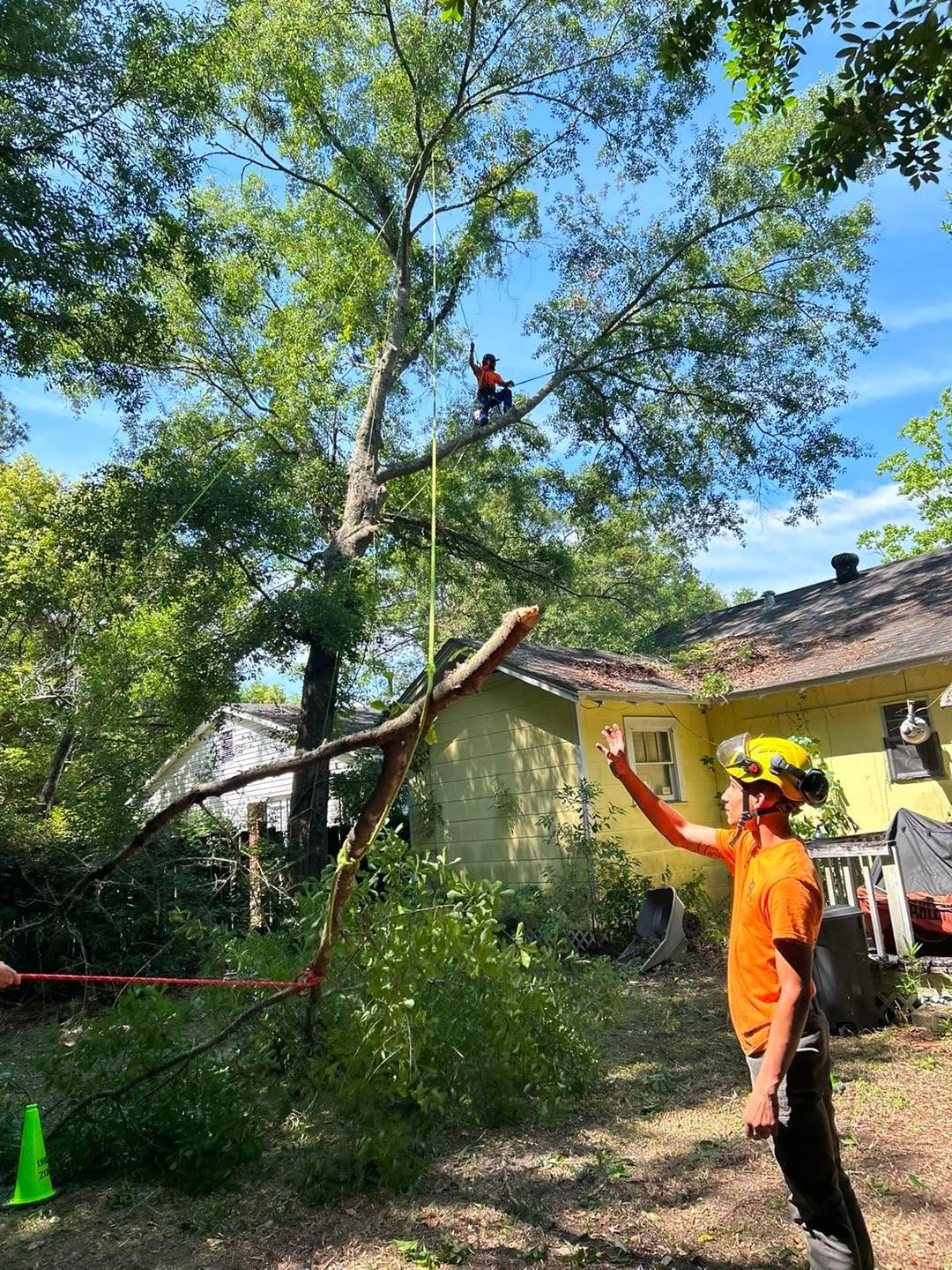
Crew members trained in canopy access use ropes, harnesses, and pole saws to reach branches safely without damaging the tree or surrounding landscape.
How much clearance should exist between branches and my roof?
Most insurance and safety standards recommend at least six to ten feet of clearance to prevent branches from scraping roofing during wind events or falling onto the structure if they break.
Will trimming damage the tree or slow its growth?
Proper trimming strengthens the tree by removing competing or weak branches, allowing the remaining structure to grow more vigorously and resist disease spread common in humid Alabama conditions.
B's Tree Service includes a health assessment with every trimming project to identify branches that compromise the canopy's long-term stability. Contact the team to schedule trimming tailored to your property's layout and seasonal weather exposure in Mobile, Fairhope, Wilmer, and throughout Baldwin County.