Full Root Extraction for Replanting and Building
Stump Removal in Mobile for properties requiring complete site clearing, replanting areas, or elimination of trip hazards and pest habitat
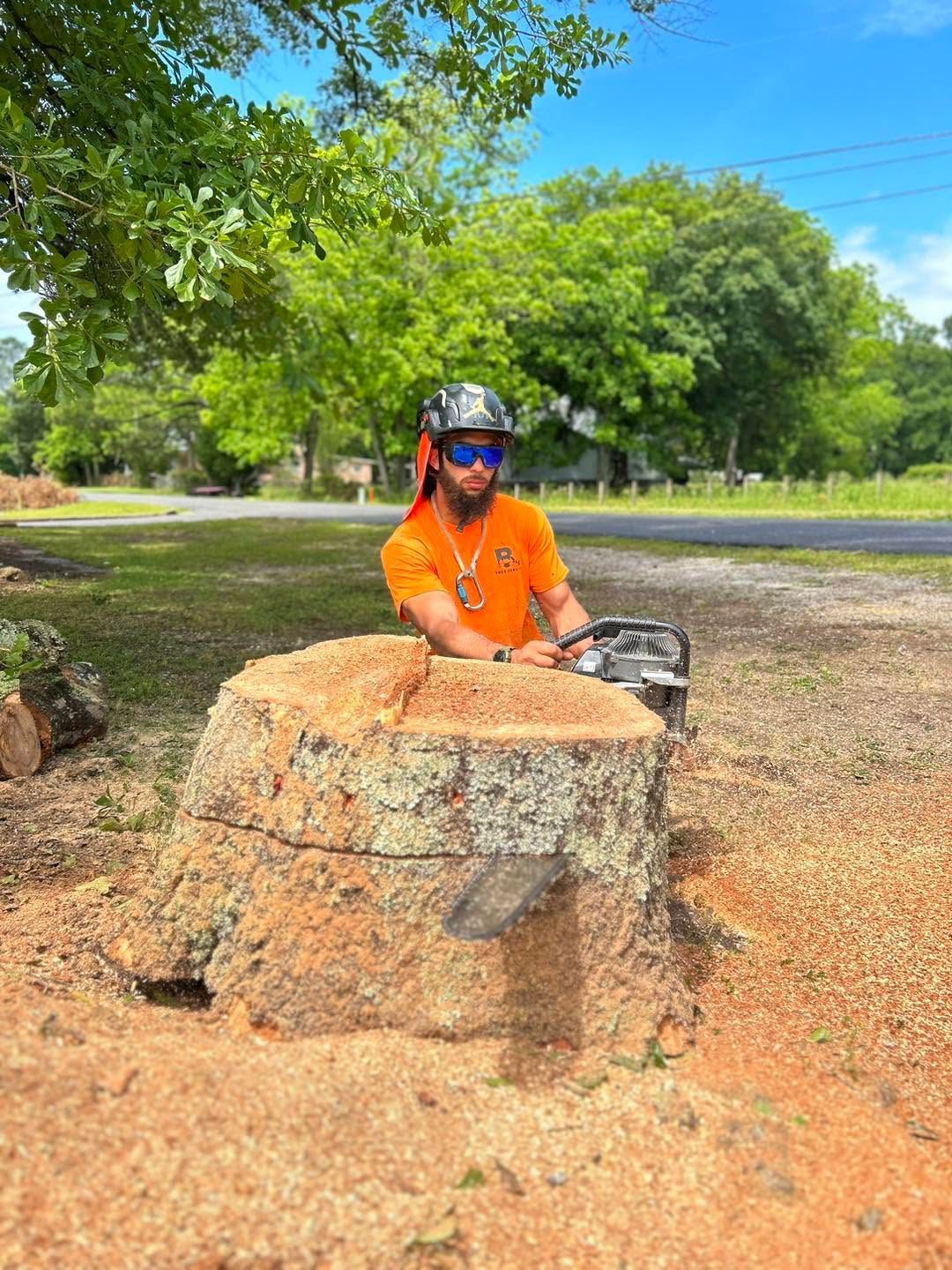
Stumps left in the ground after tree removal create safety hazards, attract termites and fungal decay, and prevent you from replanting or building in that location. B's Tree Service removes tree stumps completely by extracting the entire root system using diesel-powered skid steer equipment operated by a four-person crew trained in handling heavy site work. The process is required in Mobile, Fairhope, and Wilmer when wet Alabama soil holds root systems tightly and manual removal cannot generate the force needed to pull stumps larger than twelve inches in diameter.
Full extraction involves digging around the stump to expose major roots, cutting through lateral roots that anchor it in place, and using the skid steer to pull the stump and root ball out of the ground. Alabama's clay-heavy soil retains moisture and compacts around root systems, so powered equipment is necessary to break the soil's grip without damaging nearby landscape features or underground utilities.
Schedule a site evaluation to determine access routes for equipment and what root system size applies to your stump.
What Powered Extraction Removes From Your Property
The skid steer generates the torque required to lift stumps and root balls that weigh several hundred pounds, particularly in soil that has been saturated by recent rain. The crew uses the machine's hydraulic power to pull the stump vertically while severing roots that extend beyond the immediate extraction area, which prevents damage to surrounding trees or structures.
After extraction, the area where the stump stood is now open soil that can be filled, graded, replanted, or built upon without cutting around a remaining obstacle. The root ball and all attached wood are hauled away as part of the service, so no debris remains on your property to decompose or attract pests.
Full extraction leaves a larger hole than stump grinding, which reduces the stump to wood chips below grade but leaves the root system in place to decay over time. If you need the site leveled immediately for replanting or construction, extraction provides a clean base, though it requires backfilling the hole with soil afterward.
Frequently Asked Stump Removal Questions
Property owners preparing to replant or clear land often ask about equipment access, root system handling, and how extraction differs from grinding.
What equipment is required to remove a stump completely?
A diesel-powered skid steer provides the hydraulic force to lift root balls from compacted Alabama clay soil and the mobility to navigate residential properties without damaging lawns or landscape beds.
How large of a hole does extraction leave?
The hole is slightly larger than the root ball itself, typically two to three feet deep for mature tree stumps, and must be backfilled with soil after the stump is removed.
Can stumps be removed in wet soil conditions?
Wet soil is actually easier to work with for extraction because it loosens the soil's grip on the root system, though equipment may create ruts if the ground is saturated.
What happens to the stump and roots after extraction?
All wood and root material are hauled away on the same day as removal, so no decomposing wood remains on your property to attract termites or fungal growth.
Why would I choose extraction over grinding?
Extraction is necessary when you need to replant in the same location immediately, when the stump is near a foundation or utility line where grinding could cause damage, or when you want all organic material removed rather than left to decay underground.
Tree health assessments are included as part of every pruning project B's Tree Service completes in the Mobile and the Baldwin County area. Schedule an evaluation to determine which branches compromise your tree's structural integrity and what pruning approach will prevent further decline.